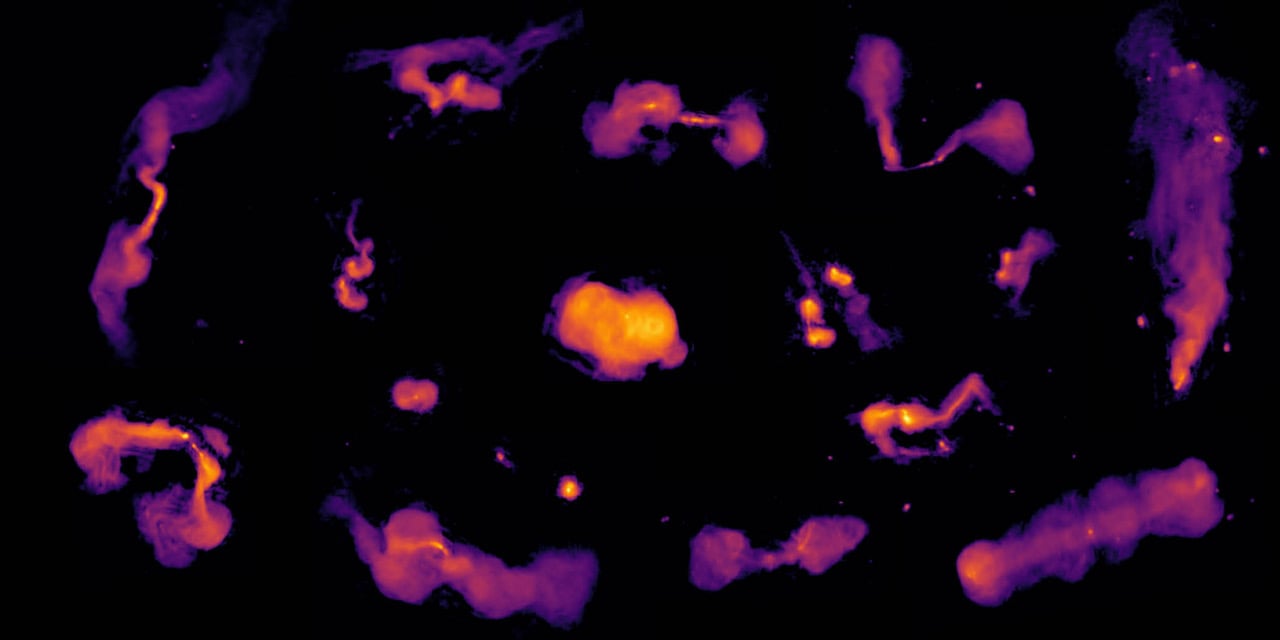
After almost seventy years of study, astronomers are still fascinated by active galactic nuclei (AGN), otherwise known as quasi-stellar objects (or “quasars.”) These are the result of supermassive black holes (SMBHs) at the center of massive galaxies, which cause gas and dust to fall in around them and form accretion disks. The material in these disks is accelerated to close to the speed of light, causing it to release tremendous amounts of radiation in the visible, radio, infrared, ultraviolet, gamma-ray, and X-ray wavelengths. In fact, quasars are so bright that they temporarily outshine every star in their host galaxy’s disk combined. The brightest quasar observed to date, 100,000 billion times as luminous as our Sun, is known as SMSS J114447.77-430859.3 (J1144). This AGN is hosted by a galaxy located roughly 9.6 billion light years from Earth between the constellations Centaurus and Hydra. Using data from the eROSITA All Sky Survey and other space telescopes, an international t...
Comments
Post a Comment